


Since 1999, China's automobile industry has shown a rapid development momentum. In the next 10 years, China's automobile industry will grow at a rate of 10% - 15%, reaching 8 million in 2010 and 13 million in 2020. The rapid development of automobile industry puts forward new requirements for automotive rubber materials and products, and also stimulates and drives the development of rubber industry.
1 silicone rubber products for automobile
1.1 automotive hose
In 2008, there were more than 20 manufacturers of silicone tubes for automobile in China. However, on the whole, the scale of the manufacturers is generally small, the distribution is scattered, the technical force is weak, the production process and equipment are relatively backward, and the development of new products is slow. In terms of production capacity, the supply of hose for ordinary cars exceeds the demand, while the hose for high-end cars is far from meeting the market demand. At present, the localization rate of rubber hose is less than 40% and the localization matching rate of high-end cars is only 5%. Therefore, in the future, the automotive hose industry should keep up with the international trend. Only by speeding up the development of high-performance silicone products, can the development needs of the automotive industry be met.
1.1.1 brake hose
Due to the emergence of non warranty cars, the increase of working environment temperature of brake fluid and the use of high boiling point brake fluid, there is a trend of using EPDM instead of styrene butadiene rubber in the inner rubber layer of brake hose at present. In foreign countries, the inner and outer rubber layers of brake hose are mostly EPDM, and the reinforcing layer is polyester, polyethanol or rayon fiber. Pressure resistant polyamide can be used as inner adhesive layer, chlorosulfonated polyethylene can be used as outer adhesive layer.
1.1.2 fuel hose
Due to the use of unleaded gasoline and the development of high oxidation value, the corrosiveness of fuel to rubber increases, so the inner layer of fuel hose must have good fuel resistance. In order to reduce the fuel permeability and further improve the heat resistance of the rubber, fluororubber, Chloroether rubber or acrylate rubber have been used instead of NBR in the inner layer.
1.1.3 power steering hose
The development of automobile requires high heat resistance and high durability of rubber hose. The inner rubber layer should have good oil resistance, and the outer rubber layer should have the characteristics of wear resistance, heat resistance and weather resistance. At present, the inner and outer layers of the hose have changed from nitrile rubber and chloroprene rubber to hydrogenated nitrile rubber, chlorosulfonated polyethylene rubber, chlorinated polyethylene rubber and acrylate rubber, and the reinforcing layer is mainly nylon 66.
1.1.4 radiator hose
With the development of automobile towards energy saving and low pollution, the temperature of engine has increased by 15 ~ 50 ℃ in recent years. Therefore, the radiator hose produced by sulfur curing system has been gradually replaced by the product produced by peroxide system, and the main material used is EPDM.
1.1.5 turbocharger hose
The main requirement of the hose is good heat resistance. At present, all rubber structure is adopted for the turbocharger hose abroad, that is, the inner rubber layer is composed of fluororubber and silicone rubber with good heat resistance, the reinforcing layer is composed of high-strength aramid fiber knitted, and the outer rubber layer is made of silicone rubber.
1.1.6 air conditioning hose
At present, with the application of new environmental refrigerant R134a, the structure and material of air-conditioning hose have changed greatly. The structure of resin, chlorinated butyl rubber and ethylene propylene diene monomer (EPDM) is the best combination for the inner rubber layer, and its use effect is good.
1.2 oil seal for automobile
Oil seal is a kind of high-tech precision rubber parts. After more than ten years of development, the annual demand of oil seal in China has exceeded 100 billion pieces, including more than 100 million oil seals for automobile main engine plants. There are more than 300 production enterprises of different sizes, including more than 10 enterprises with an annual output of more than 30 million pieces, There are more than 3000 kinds of products, and 30% of the enterprises export in different quantities. The development of automobile industry has provided a broad market and good opportunity for the development of oil seal. Through the introduction of technology and the adjustment of product structure, China's oil seal industry has accelerated the application of new technology and the development of new products. The performance, quality and variety of products have been greatly improved, especially the oil seals of automobile engines, gearboxes and valves with high technology content, as well as fluororubber, oil seal, oil seal and oil seal Acrylic rubber, hydrogenated nitrile rubber, polytetrafluoroethylene oil seal and composite special oil seal have made obvious progress in manufacturing technology.
The key is that in the future, domestic oil seal manufacturers should focus on oil seal hydrodynamics and develop high-performance products with independent intellectual property rights. The future development trend of oil seal is composite oil seal, oil seal made of fluororubber bonded with aluminum framework and injection vulcanization process, and polytetrafluoroethylene lamination on the lip of oil seal, In addition, glass fiber, graphite, molybdenum disulfide, etc. are added to the PTFE to fit the PTFE oil seal, which can achieve better use effect.
1.3 automobile sealing strip
At present, there are more than 60 enterprises producing automobile rubber sealing strips in China, and more than 40 foreign advanced extrusion production lines for automobile rubber sealing strips are introduced. The annual production capacity is about 170 million meters, and the actual output is about 100 million meters.
The material of rubber sealing strip is basically EPDM. With the rapid development of automobile industry, more and more new materials are used for automobile sealing strip, especially the advantages of thermoplastic elastomer used as automobile sealing strip are recognized by people in the industry. The thermoplastic elastomer materials used in automobile sealing strip are mainly polyolefin thermoplastic elastomer (TPV), which has good wear resistance and low friction coefficient. It can be used not only as extrusion material of automobile glass guide groove sealing strip, but also as corner material of automobile sealing strip. In addition, water foaming sponge TPV has been successfully developed in foreign countries, and has been widely used in automobile rubber sealing strip, which has become a new trend to replace sponge rubber in automobile sealing strip. In addition, TPV coloring process is simple and convenient, which is usually used as the exterior decoration material of automobile rubber sealing strip. At present, the production technology of color TPV and color rubber on-line co extrusion coating rubber sealing strip has been introduced and applied in several domestic automobile sealing strip manufacturers.
1.4 automotive drive belt
There are two main types of automobile transmission belt: V-belt and synchronous gear belt. The production of car drive belt, especially synchronous gear belt, started late in China, and there is still a certain gap in product quality and performance compared with foreign similar products. In 2006, the output of automobile V-belts in China was about 600 million meters, and the output of synchronous belts was about 18.9 million.
Chloroprene rubber and hydrogenated nitrile rubber are used as the main materials of V-belt in foreign countries. Polyester cord and aramid cord are mainly used as the skeleton materials; In China, chloroprene rubber is mainly used, and hydrogenated nitrile rubber is rarely used, while rayon and glass fiber are the main skeleton materials. Chlorosulfonated polyethylene (CSM) and hydrogenated nitrile rubber (HNBR) are selected as the main materials of automobile synchronous belt in China, and the skeleton material is glass fiber. In foreign countries, HNBR / isobutyric acid composites are mainly used, and the skeleton material is aramid cord. Therefore, in the future, the manufacturing of domestic transmission belt should be transformed from traditional chloroprene rubber and chlorosulfonated polyethylene rubber to hydrogenated nitrile rubber as soon as possible. Meanwhile, the skeleton material should be based on domestic development, and be transformed to aramid cord and polyester cord as soon as possible.
1.5 automotive damping rubber products
At present, there are hundreds of enterprises producing rubber products for automobile vibration reduction in China. The main products are rubber spring, rubber air spring, frame beam, engine suspension damper, torsional damper, etc. It plays an important role in limiting vehicle emissions, reducing noise, improving ride comfort and safety. With the rapid development of automobile industry, especially the requirements for safety, comfort and easy operation, the consumption of silicone rubber products for automobile vibration reduction is increasing year by year. In 2008, the domestic market demand for rubber products for automobile vibration reduction is about 150 million. In addition, the production of high-end cars is increasing in the future, and the market demand for rubber products for automobile vibration reduction is growing faster, Therefore, the demand for materials is also diversified. However, it needs to be selected according to the different parts of the products used. Considering the fatigue resistance and creep properties, natural rubber should be selected; In order to improve its heat resistance, styrene butadiene rubber is selected; If the dynamic heat generation is small, cis-1,4-polybutadiene rubber can be used; If the rubber damping products are in contact with all kinds of oil medium, nitrile rubber is selected; The temperature of engine and exhaust pipe is increased due to more stringent restrictions on vehicle exhaust emission standards. EPDM with high heat resistance is needed for the rubber used in these parts.
The future development direction of automotive shock absorber products in China is standardization and serialization, and the emphasis should be put on the hydraulic shock absorber and torsional shock absorber which have been successfully applied abroad. The development of rubber damping materials should further improve its heat resistance and develop new elastomer materials with low dynamic ratio and high damping.
1.6 other rubber products
In addition to the above-mentioned automotive rubber products, other main varieties are brake film, cup and dust cover, etc. The future development should focus on the use of fluorosilicone rubber, polyester fabric as the skeleton material to make fuel supply pressure regulator diaphragm for cars; Chlorinated polyethylene (CPE) was used to make automobile diaphragm. As the material of dust cover, the most important requirement is good weather resistance. Chloroprene rubber is generally used for isokinetic directional joints, but with the improvement of heat resistance, the application of polyolefin thermoplastic elastomer is gradually increasing. In Europe and the United States, most cars use polyolefin thermoplastic elastomer to make dust cover. This kind of material can not only meet the requirements of weather resistance, oil resistance and heat resistance, but also realize the lightweight of the car.
2 technical requirements of rubber products for automobile
Although some natural rubber and general synthetic rubber are used in automotive rubber products (excluding tires), special rubber with better performance is used in most occasions. Foreign manufacturers of automotive rubber products use a large number of special rubbers such as ACM, HNBR, FKM, Si, CHC, chlorosulfonated polyethylene, etc. at the same time, they continue to develop and apply special rubber with unique performance. Dow Corning's silastic 4-9040, 4-9060 and 4-9080 fluorosilicone rubbers have excellent heat resistance, fuel resistance and solvent resistance, which are very suitable for manufacturing automotive hose and silicone sealing products. Santaprene rubber from AES has been used in sealing products of Ford, Volkswagen, Toyota and Benz. EPDM / silicone modified rubber products developed abroad are superior to silicone rubber in heat resistance, weather resistance and compression set properties. They can be vulcanized with sulfur or peroxide, and can be used in various molding methods. Therefore, they can be used in occasions where silicone rubber or ethylene propylene rubber can not adapt (damping materials for automobiles, etc.).
At present, the main materials of automotive rubber parts in China are traditional NR, SBR, Cr, NBR and EPDM, while only a small amount of new special rubber such as ACM, FKM, Si, HNBR (hydrogenated nitrile rubber) and TPE (polyurethane elastomer) are applied. The main reason is that the output of special rubber products in China is very small, and the production has not formed large-scale and series, Many kinds of rubber products need to be imported from abroad, which, to some extent, limits and affects the development of China's automotive rubber products to high-performance and special fields. In the future, with the rapid development of automobile industry, higher requirements on the quality, performance and quantity of automobile rubber products are put forward. Therefore, in a sense, it will also stimulate the development of China's special rubber industry, so as to promote the development of new materials and new products.
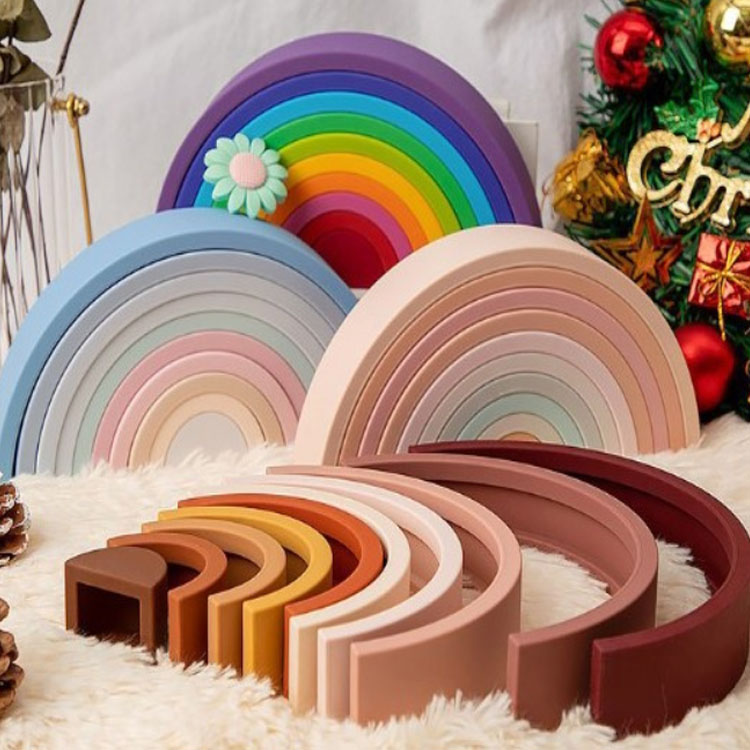
儿童益智硅胶玩具原来越热销,那它主要都有哪些优点呢:1.采用食品级硅胶原材料进行生产加工,安全环保,无色无味,不用担心对人体造成危害。2.儿童硅胶玩具作为一种玩耍的工具,使用时间久了,容易变脏,但是清洗十分方便,用沸水消毒也不会变形等,其···


 中文版
中文版 English